
Why Mikel Arteta Was Right to Push for Benjamin Šeško Over Viktor Gyökeres
For months, Arsenal fans debated one question relentlessly: which striker should lead the line?
The discussion was loud, emotional, and often divided between data, highlights, and instinct.
Quietly, however, Mikel Arteta had already made his call.
He wanted Benjamin Šeško.
Not Viktor Gyökeres. Not a stopgap. Not a short-term solution.
And recent performances are making it increasingly clear why.
Two Matches, Two Very Different Stories
Football has a way of stripping away opinion and exposing truth.
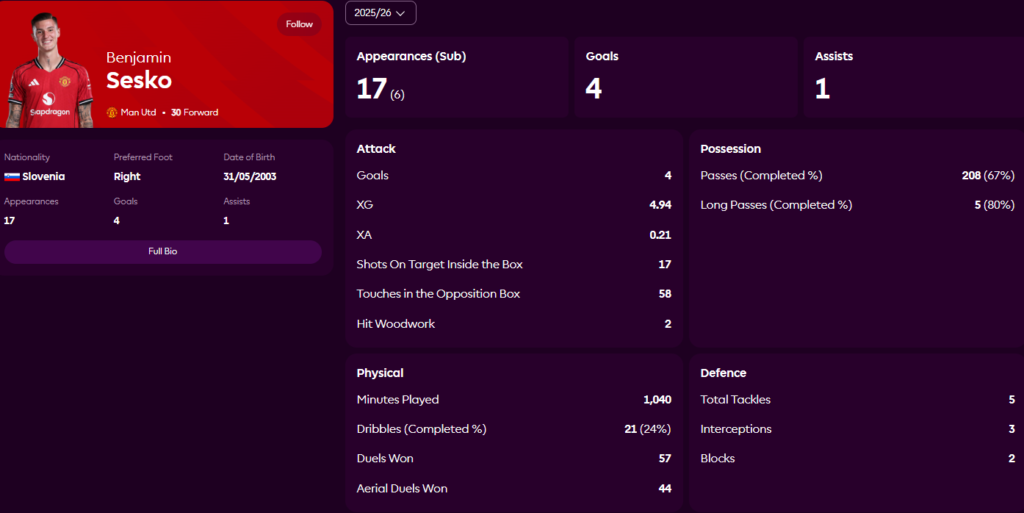
Against Burnley, Šeško delivered a performance that went far beyond goals:
-
7 shots on target
-
2 goals
-
Constant occupation of central danger zones
-
Aggressive off-ball movement
-
Centre-backs pinned deep for the entire match
Burnley were never comfortable. Every Arsenal attack felt dangerous because Šeško forced defenders into constant decision-making.
By contrast, Viktor Gyökeres’ outing against Liverpool told a very different story:
-
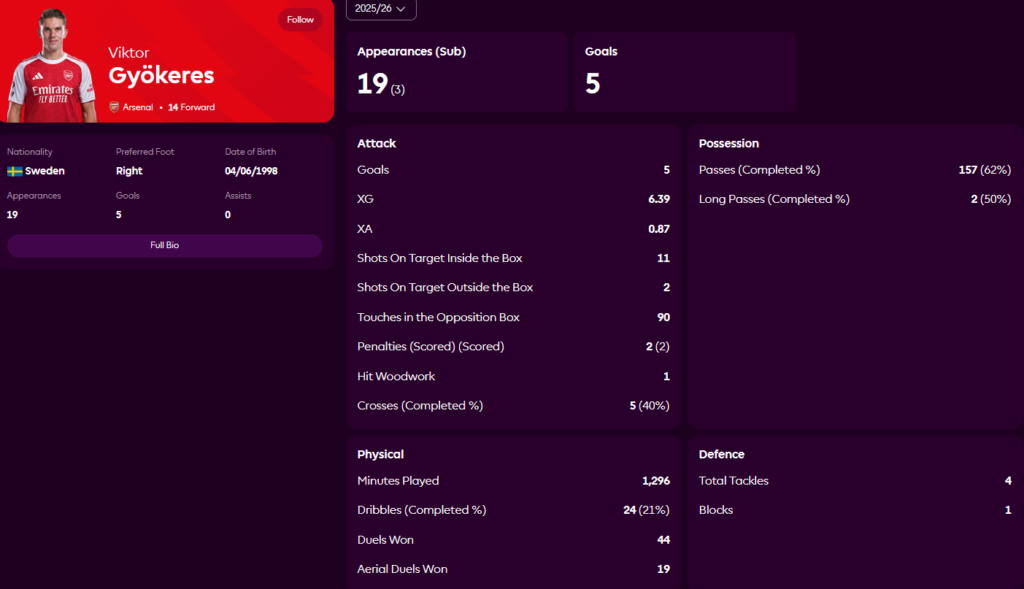
8 touches in 64 minutes
-
Minimal involvement in the box
-
Little sustained pressure on defenders
-
Substituted without altering the flow of the game
This wasn’t about form.
It was about fit.
Arsenal’s Problem Was Never Goals — It Was Control
Arsenal don’t lack creators. They lack control inside the penalty area.
Šeško offers exactly that.
His profile aligns with what Arsenal face every week:
-
Deep defensive blocks
-
Compact midfields
-
Minimal space between the lines
In these conditions, Arsenal need a striker who creates danger through positioning, not just movement into space.
Šeško consistently:
-
Pins centre-backs
-
Attacks central zones
-
Occupies defenders even when he isn’t receiving the ball
This is how teams stretch low blocks — not by drifting wide, but by forcing defenders to defend their own goal.
Why Gyökeres Struggles at Elite Level Games
Gyökeres is a very good striker.
But context matters, He thrives when:
-
Matches are open
-
Transitions are frequent
-
Defenders are retreating
Arsenal rarely get those conditions.
Against elite opponents — particularly in tight, high-control games — space disappears. When that happens, Gyökeres’ influence drops sharply.
Šeško doesn’t wait for space.
He creates it.
The Data Supports the Eye Test
Šeško’s shot maps reveal a striker who lives in high-value areas:
-
Central shots
-
Close-range opportunities
-
Repeated presence inside the box
Gyökeres’ data is more scattered:
-
Fewer touches in prime zones
-
Lower involvement against compact defences
-
Less dominance when the tempo slows
One profile fits Arsenal’s system.
The other relies on the game opening up.
Arteta’s Instinct Was Tactical, Not Emotional
This was never about hype or social media noise.
Arteta’s preference was rooted in:
-
Tactical scalability
-
Age profile
-
Long-term development
-
Compatibility with Arsenal’s positional play
Šeško isn’t just a striker signing.
He’s a system enabler.
With him on the pitch:
-
Bukayo Saka gains more isolation
-
Martin Ødegaard operates between lines more freely
-
Arsenal sustain pressure for longer phases
This is how elite teams turn control into trophies.
Final Thoughts: This Debate Is Closing Quickly
Šeško doesn’t need the game to suit him.
Gyökeres does.
That distinction matters at the highest level.
Arteta saw it early.
Now the performances are catching up.
For Arsenal, this isn’t just about a striker.
It’s about building an attack that holds up under pressure — domestically and in Europe.
And right now, Benjamin Šeško looks like the forward built for that responsibility.

[…] Gyökeres is a direct, aggressive striker who attacks central zones relentlessly. Defenders know that if he receives on the half-turn inside the box, damage follows. So they step in early, deny space, and engage physically. […]