

Calling any club, or “Arsenal the best team in the world” is always going to divide opinion. Football fans are tribal, emotional, and fiercely protective of their own narratives. But strip away bias, look beyond trophies alone, and analyse performance, consistency, tactical dominance, squad evolution, and sustainability and a compelling case emerges.
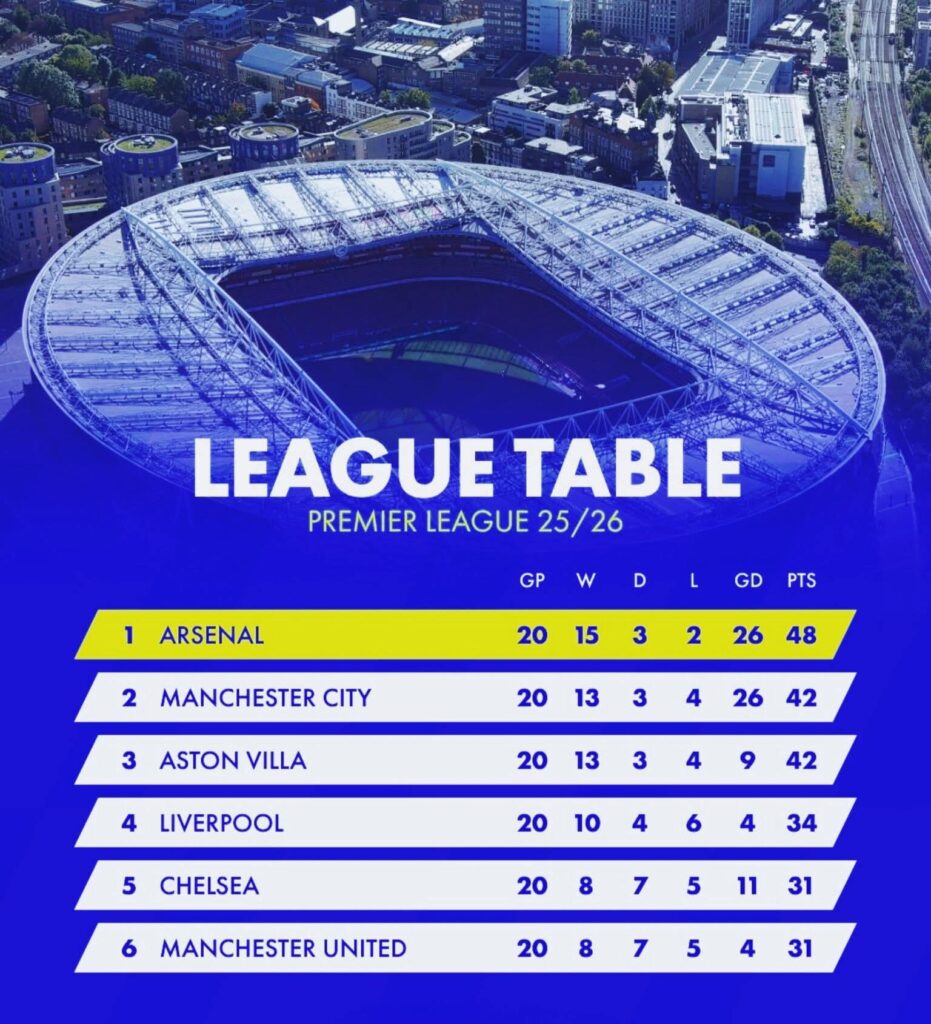
Right now, Arsenal are the best team in the world.
Not because of hype. Not because of history. But because of what they are doing on the pitch week after week.
Performance Over Perception
The biggest mistake fans make when ranking teams globally is relying solely on trophies. Titles matter but they are lagging indicators. They tell you who won, not who played best over time.
Arsenal’s underlying performance metrics over the last two seasons are elite by any global standard:
-
Top-tier expected goals (xG) difference
-
Defensive solidity matched with attacking control
-
Territorial dominance against both elite and low-block opponents
-
Consistency across competitions, not just short bursts
This is not a side scraping results. Arsenal control matches.
They dictate tempo, suffocate opponents in possession, and force mistakes high up the pitch. That level of structural dominance is what separates great teams from merely successful ones.
Tactical Superiority and Evolution
Mikel Arteta has built something rare: a team that is tactically flexible without losing its identity.
Arsenal can:
-
Dominate possession against deep blocks
-
Transition brutally against high lines
-
Defend compactly without sacrificing attacking threat
-
Press aggressively or drop into controlled mid-blocks when required
The spacing, rotations, and positional play are among the most refined in world football. Compare this to many “top” European sides who rely heavily on individual brilliance or moments — Arsenal win games through repeatable systems.
That matters over a 60-game season.
Squad Balance, Not Galácticos
Some clubs assemble stars. Arsenal assemble profiles.
Every player in the squad fits a defined role within the system:
-
Defenders comfortable stepping into midfield
-
Midfielders capable of controlling tempo and pressing
-
Attackers who contribute defensively as much as creatively
There is no passenger culture. No luxury players. No reliance on a single superstar to bail the team out.
That balance makes Arsenal harder to game-plan against than sides built around one or two elite individuals.
Consistency Against All Opposition
Being the best team in the world isn’t about beating elite sides once or twice. It’s about not dropping your level against weaker opposition.
Arsenal’s floor is incredibly high.
Even on “off days”, they:
-
Concede very little
-
Control territory
-
Force opponents into low-quality chances
-
Remain competitive until the final whistle
This is why Arsenal remain in title races deep into seasons. Not because they peak high. but because they rarely collapse.
Youth, Sustainability, and the Future
Here’s the most uncomfortable truth for rival fans: this Arsenal team isn’t even at its peak yet.
Key players are entering or yet to reach their prime. The squad has been built with longevity in mind, not short-term success. That matters when comparing Arsenal to sides reliant on ageing cores or unsustainable wage structures.
The best team in the world isn’t just about today. It’s about:
-
Sustainability
-
Scalability
-
The ability to evolve rather than reset
Arsenal tick every box.
The Global Context
Across Europe, no other team combines:
-
Tactical sophistication
-
Squad balance
-
Consistent performance
-
Defensive solidity
-
Attacking control
-
Long-term vision
Some teams may win more trophies in isolated seasons. Others may have flashier individuals. But football is not won on aesthetics or narratives — it’s won through repeatable excellence.
Right now, Arsenal are closer to that ideal than any team on the planet.
Final Thought
Calling Arsenal the best team in the world shouldn’t be controversial. It should be expected — if football analysis is done honestly.
This is a team built on structure, intelligence, and control. A side that dominates games without chaos. A club that has aligned vision, recruitment, and coaching into one coherent identity.
Trophies will follow. History always rewards teams like this.
And when they do, the conversation will shift from “Are Arsenal the best?” to “How long can they stay there?”